

There is something beautifully unsettling about language.
Sometimes two words sit beside each other like mirrors, revealing a truth that logic alone cannot see. In Hindi, the words lagān and lagām offer such a reflection.
Lagān is a tax, a levy, something imposed.
Lagām is a bridle, a rein, a leash, something used to guide, restrain, and control.
Though they are distinct words, they seem to whisper to one another across history. One evokes an external burden. The other evokes external control. One is attached to our labour. The other is attached to our movement.
And perhaps that is why they feel so poetic.
Because human life has always revolved around one subtle question:
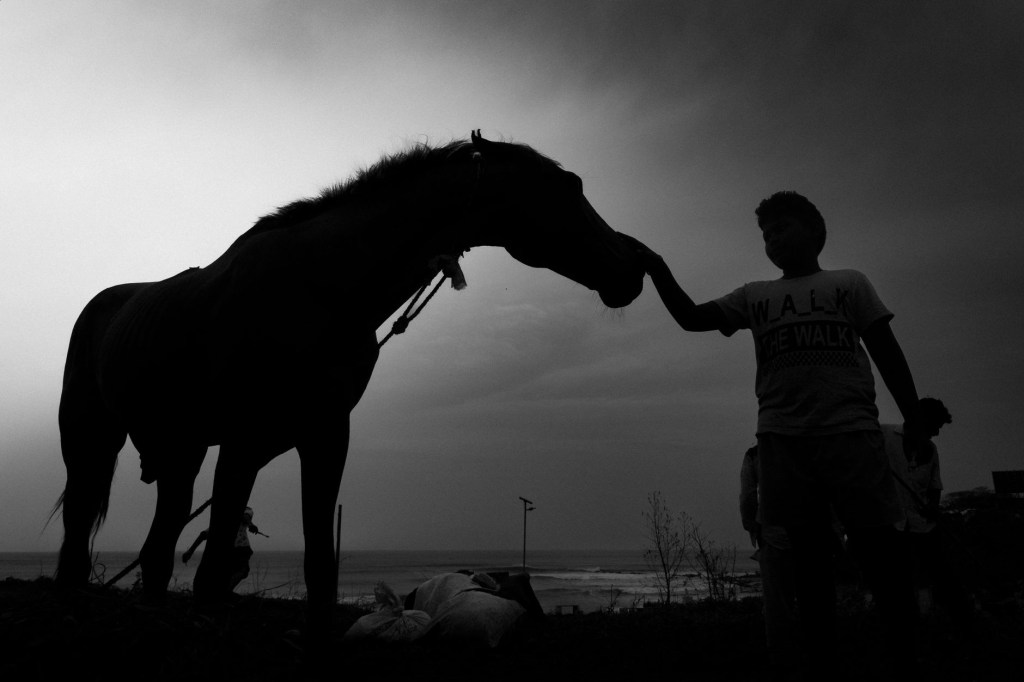
Who is holding the reins?
The Ancient Desire to Control
Nature moves freely.
Rivers flow where they wish. Winds do not obey borders. A bird does not ask permission before crossing a mountain.
Yet human civilization has often been built upon the urge to direct, organize, and control.
At first, we sought control over the physical world. We cultivated land, domesticated animals, built walls, created laws, and established systems. There is wisdom in some of this. Structure allows communities to flourish.
But there is also a shadow side.
The ego rarely stops where necessity ends.
Once it feels power over things, it often seeks power over people.
A field is not enough.
A building is not enough.
A title is not enough.
A bank account is not enough.
The desire quietly expands.
It begins seeking influence over minds.
The Most Valuable Resource
What is the most valuable thing in the world?
Many would say gold.
Others might say land, oil, food, technology, or data.
But beneath all of these lies something even more valuable:
human attention.
Where attention goes, life goes.
Attention determines what we buy, what we fear, what we celebrate, what we reject, and even what we believe ourselves to be.
An individual who can influence minds gains access to the very mechanism through which reality is experienced.
Perhaps this is why every age develops sophisticated systems for capturing attention.
In one era it may be institutions.
In another, newspapers.
Then radio.
Then television.
Then digital platforms.
The forms change. The underlying dynamic remains.
The competition is not simply for money.
It is for awareness.
For attention.
For the ability to shape perception.
“The most valuable resource in the world is not money. It is human attention.”
The Invisible Lagam

Most leashes are visible.
A horse feels the rein.
A dog sees the leash.
A human being, however, can be guided by invisible forces.
Advertising.
Algorithms.
Social pressure.
Fear of exclusion.
The desire for validation.
The endless pursuit of approval.
The modern bridle is rarely leather.
It is psychological.
Many of us believe we are making completely free choices while swimming in oceans of influence we scarcely notice.
What we desire.
What we purchase.
How we spend our time.
What we become angry about.
What we become afraid of.
Even what we consider success.
Many of these currents are planted long before we become conscious of them.
The deepest form of control is not forcing someone to obey.
It is shaping the conditions under which they willingly choose.
The Controller Is Also Controlled
But there is another side to this story.
The one holding the reins is not necessarily free.
This is where the spiritual dimension emerges.
The person who seeks to control others becomes attached to control itself.
Power begins to consume its owner.
The need to influence becomes a dependency.
The need to maintain status becomes a prison.
The need to manage perception becomes exhausting.
The controller becomes controlled by the desire to control.
The hunter becomes trapped by the hunt.
The architect becomes imprisoned by the system.
The ego, in trying to dominate, quietly binds itself.
Perhaps every leash has two ends.
Yoga as Liberation
Yoga offers a radically different possibility.
It does not seek power over others.
It asks us to gain awareness of ourselves.
The yogic journey is not about controlling another mind.
It is about understanding our own.
The battlefield is internal.
Every attachment examined.
Every fear witnessed.
Every conditioned impulse brought into awareness.
The ancient sages understood something profound:
A person who cannot govern their own mind will constantly seek to govern the minds of others.
And a person who deeply understands their own mind has less interest in domination.
Freedom begins where unconsciousness ends.
Breaking the Spell
The answer is not rebellion for its own sake.
The answer is awareness.
To pause before reacting.
To question before believing.
To sit in silence long enough to hear our own voice beneath the noise.
To create rather than merely consume.
To observe our habits.
To reclaim attention from whatever constantly demands it.
Every moment of genuine awareness loosens a knot.
Every act of presence weakens an invisible leash.
Every conscious breath returns a little sovereignty.

Beyond Lagan and Lagam
Perhaps that is the hidden poetry of these words.
Lagān reminds us of what is imposed upon us.
Lagām reminds us of what seeks to guide or restrain us.
But the deeper journey is neither tax nor leash.
It is awakening.
For as long as we remain unconscious, something else will gladly tell us who we are, what we should want, and where we should go.
The real revolution is not external.
It is the simple, courageous act of reclaiming one’s own mind.
And perhaps that is what humanity has been searching for all along:
Not power over others.
But freedom from the need to be controlled, and freedom from the need to control.
“Every conscious breath returns a little sovereignty.”
Humanity’s struggle may not simply be against the forces that seek to control us. It may also be against the part of ourselves that longs to hand over responsibility for our own thinking. The deepest lagām may not be social media, governments, corporations, or institutions. The deepest lagām may be the unexamined mind itself. For when we are unconscious, anyone can hold the reins. But when awareness awakens, the reins begin to disappear. What remains is not control, but clarity. Not power over another, but sovereignty over oneself.
About the Inspiration
This reflection began with two Hindi words, lagān (tax or levy) and lagām (bridle or rein). Though their histories diverge, together they offer a poetic lens through which to contemplate attachment, power, influence, and the timeless human search for inner freedom.


This is so eloquent and insightful, Niki. The way you let language open into philosophy – from tax and rein to attention, influence and inner freedom – is so quietly calm and powerful. You have always had a way of revealing truth with gentleness and precision, and this carries the same depth. I loved reading it!
LikeLiked by 2 people
Aww, thank you so much for your kind words, Linda. I love that the piece spoke to you in that way. It began with a curiosity about two Hindi words and gradually unfolded into a reflection on freedom, attention, and the human experience. I’m so grateful it resonated with you, and I deeply appreciate you taking the time to share your thoughts. 💛
LikeLike